A New Playbook for Real Results
Product teams are under pressure to deliver intelligent features faster while budgets and headcount stay flat. In that climate, Low code AI Integrtion has become the practical path to ship real value in days, not quarters. The biggest shift is how generative models now power low-code building blocks, from visual workflows to prompt-driven components. Recent industry roundups point to platforms like GenCodex introducing “Vibe Coding,” which lets developers blend AI into apps with minimal overhead. On the data side, tools highlighted by Matillion replace brittle scripts with natural-language pipelines and agentic assistants. Together, these advances cut the expertise barrier so citizen developers and small teams can contribute safely. Voice is the most visible proof: users increasingly expect “chatgpt voice” experiences that feel human, immediate, and hands-free. That is where Sista AI fits, offering plug-and-play voice agents that layer onto websites and apps without rewrites. By pairing a low-code mindset with voice-first interaction, companies turn static UX into conversations that guide, automate, and resolve. The result is a new baseline for speed and accessibility that aligns perfectly with Low code AI Integrtion in 2025.
Why Adoption Is Accelerating
Several forces are driving Low code AI Integrtion across organizations of every size. Prebuilt components, managed connectors, and visual builders remove boilerplate so teams focus on outcomes, not plumbing. Matillion’s Data Productivity Cloud, for example, combines an intuitive canvas with more than 150 connectors and an AI agent called Maia. Teams can describe a pipeline in plain language and let the platform propose steps that are production-ready with enterprise governance. GenCodex emphasizes the developer experience with AI-augmented low-code that supports quick prototyping and cross-platform delivery. These options reduce backlog risk by unlocking contributions from analysts and product managers alongside engineers. On the experience layer, Sista AI brings voice intelligence, a VUI controller, and workflow automation to existing interfaces. A retailer can add guided shopping flows in a day, then measure lifts; Sista AI customers report up to a 35% increase in conversion and a 55% jump in engagement, which you can preview in the Sista AI Demo. Because the agent sits as a snippet or SDK, experimentation is low stakes and reversible. For teams comparing paths, this pairing of data automation and voice UX represents the most tangible route to Low code AI Integrtion with measurable upside.
From Data Friction to Voice-First Flows
Data friction has traditionally blocked automation, but modern low-code AI closes that gap by unifying access, transformation, and governance. In practice, an operations analyst can ask the platform to ingest claims, enrich them with a fraud model, and publish results to a warehouse without writing long SQL or Python. With Matillion, such pipelines can be described in natural language while policy and lineage are enforced behind the scenes. Now add a voice layer: Sista AI’s conversational agent can orchestrate the end-to-end flow, from gathering user intent to triggering back-end jobs and summarizing outcomes in plain speech. The agent supports over 60 languages, making “chatgpt voice” interactions inclusive for global audiences. Its voice UI controller can navigate pages, fill forms, and click buttons to complete multi-step tasks the way a human would. For knowledge-heavy steps, integrated retrieval augments the conversation with your docs or CRM so answers are contextual and auditable. This is Low code AI Integrtion in action: natural language in, governed automation and voice-first delivery out. The approach also boosts accessibility for users who prefer speaking over typing or require assistive technologies. As organizations standardize this pattern, they turn complex workflows into approachable conversations that anyone on the team can launch.
Patterns and Quick Wins You Can Replicate
Early adopters follow a predictable path to results, starting with low-risk, high-volume journeys. Common wins include support triage, order status, appointment scheduling, claim intake, and analytics retrieval. These scenarios have clear intents, measurable KPIs, and minimal integration sprawl. One healthcare provider, for instance, can capture symptoms via voice, validate eligibility, and schedule a slot while posting structured data to the warehouse. An e-commerce team can guide shoppers through comparison, upsell bundles, and cart recovery using conversational prompts. On the back office, managers query metrics by voice—“show churn by segment this quarter”—and receive spoken summaries plus links to dashboards. Sista AI’s UI control and automation handle the web steps, while data platforms manage governance and scale. Because the stack is low-code, pilots move from idea to user testing in days, then scale gradually behind feature flags. The compound effect is faster releases, lower support costs, and better accessibility without committing to risky rewrites. Each success builds confidence in Low code AI Integrtion as a sustainable operating model, not a one-off experiment.
How to Start Without Rewrites
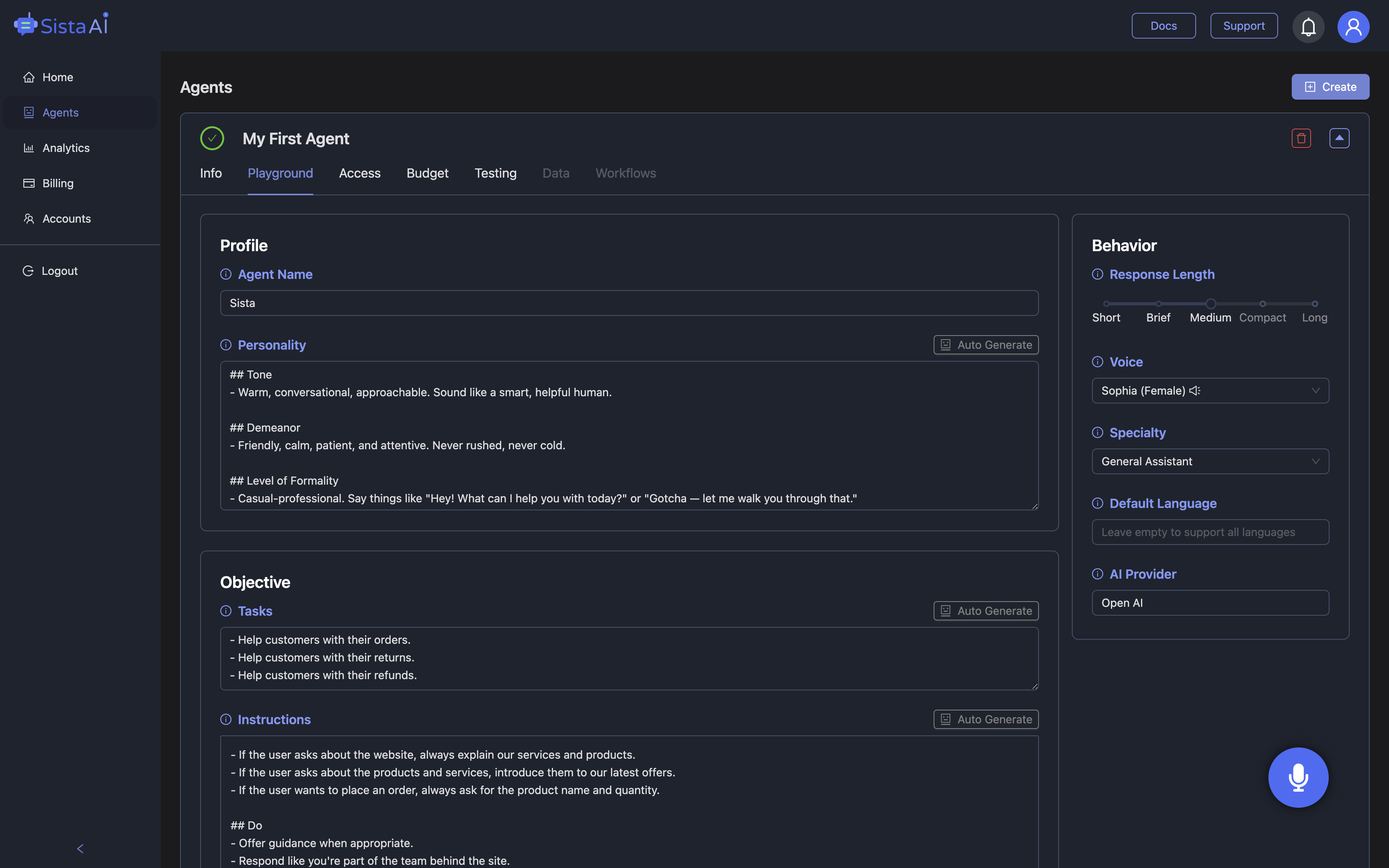
A practical way to start Low code AI Integrtion is to pick one journey, define a target metric, and map the minimum data you need. Connect your warehouse or CRM in a low-code data tool, draft a natural-language pipeline, and secure it with existing governance. In parallel, embed Sista AI as a lightweight snippet or SDK, configure the agent persona, and link a small knowledge base. Use the voice UI controller to automate the on-screen steps you already perform manually, keeping scope intentionally narrow. Conduct a one-week pilot with real users, instrument the flow, and compare outcomes to baseline. If results mirror typical lifts in conversion and engagement, expand to the next journey and add multilingual support. When you are ready to see a live example, explore the Sista AI Demo and judge the voice experience in your own environment. If it fits your roadmap, you can sign up to configure an agent, connect knowledge, and invite teammates in minutes. For teams that need architectural guidance or custom workflows, Sista AI also offers advisory support so you can scale responsibly. The path forward is clear: combine governed data automation with voice-first interaction, and let low-code accelerate every release cycle.
Stop Waiting. AI Is Already Here!
It’s never been easier to integrate AI into your product. Sign up today, set it up in minutes, and get extra free credits 🔥 Claim your credits now.
Don’t have a project yet? You can still try it directly in your browser and keep your free credits. Try the Chrome Extension.

For more information, visit sista.ai.