Introduction
Building an End-to-End Web Agent has become the fastest way to automate browser work without hiring a large engineering team. The opportunity is huge, but dynamic pages, authentication flows, and rate limits trip up many first attempts. Start with a simple, disciplined path: define the agent’s job precisely before you write a line of logic. Distinguish one-off tasks like a weekly email follow-up from recurring jobs such as lead capture, because each demands a different framework for speed, depth, or scale. For web agents, that definition should spell out exactly which sites to navigate, which elements to click, which forms to complete, and what data to extract. Teams that skip this scope often see 40–50% failure rates and weeks of rework. A realistic starting benchmark for a first prototype is 80–85% task success across 5–10 concrete examples. If you plan for 1,000+ daily web actions, you also need hard rules for API rate limiting and state recovery. Many teams familiar with chatgpt voice find that adding a natural speech layer clarifies intent and reduces user friction during complex flows. Put simply, Building an End-to-End Web Agent works best when you pair careful scoping with a voice-friendly interface that keeps users in the loop.
Designing the Agent’s Brain and Choosing Tools
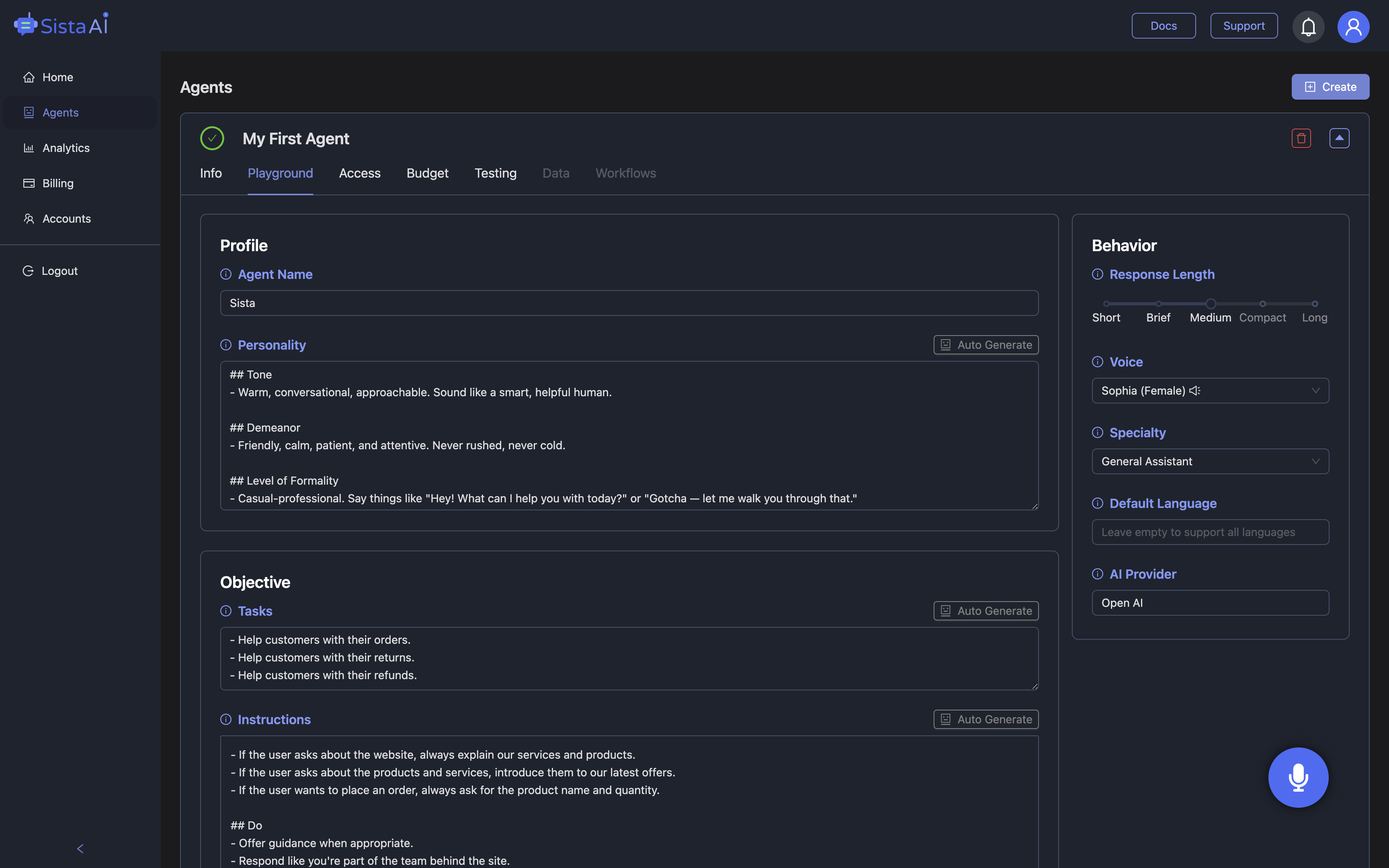
With the job defined, pick a platform that matches your skills and timeline. No-code builders such as Lindy, Rivet, or Bedrock provide drag‑and‑drop flows, prompt libraries, and prebuilt integrations so you can move fast. Starter plans typically run $20–50 per month for around 1,000 actions, while developer tiers at $100+ unlock broader API usage. Next, craft durable core instructions: tone, task boundaries, fallback protocols, and a consistent approach to scraping dynamic sites or handling logins. Add reliability boosters like up to three error retries, timeouts, and human‑in‑the‑loop approvals for high‑stakes clicks. Wire external tools—Google Sheets for logs, HubSpot for CRM updates, and Slack for notifications—so the agent completes real actions after a scrape. Real teams report a 25% lift in leads from a LinkedIn outreach agent and research bots summarizing roughly 50 sites per hour. Aim for less than 5% error rates and continuous monitoring toward 99% uptime as you expand coverage. Be mindful that poor prompt design can cause about 30% drift, so version and test your instructions frequently. At this stage of Building an End-to-End Web Agent, you are shaping the “brain,” and a voice-capable surface makes those decisions easier for users to steer in real time. That is where a platform like Sista AI’s voice UI and workflow automation can sit on top of your flows to execute scroll, click, type, and navigation by speech across 60+ languages.
From Prototype to Production Architecture
Turning a prototype into production means designing the runway, not just the plane. Translate the idea into cloud architecture using infrastructure‑as‑code; teams that generate Terraform from a visual diagram often cut deploy time by roughly 80%. Implement a clean Python backend—say, agent.py built to an explicit design spec—with precise function names, dependencies, and browser orchestration logic. Let automated unit tests cover 90%+ of scenarios, including mocks for dynamic page loads and authentication flows, and use AI pair programming to squash timeouts or state mismatches quickly. A single GitHub Actions pipeline can run agent evaluations on every commit and ship to production in under 10 minutes if all checks pass. In production, track latency for web actions under about 500 ms when possible, keep costs near $0.02 per query at scale, and autoscale to handle 1,000+ sessions per day with 99.9% uptime. For the human side, Sista AI provides an embeddable voice layer—via universal JS snippets and SDKs—that maps speech to browser controls while a backend agent does the heavy lifting. Its knowledge features can ground responses in your documentation, while ultra‑low latency keeps interactions feeling live. If you want to experience a voice‑driven front end for your web automations, try the Sista AI Demo and imagine those commands wired to your agent’s API. A typical scenario is a vendor‑portal workflow: a user says “Review last week’s purchase orders and confirm shipments,” the voice UI navigates forms, and the backend updates records and sends confirmations.
Evaluation, Guardrails, and Iteration
Before wide release, establish an evaluation loop that grows with your coverage. Start with 5–10 curated examples to validate feasibility, then scale to 30–50 programmatic runs with metrics such as 95% task accuracy and under two minutes end‑to‑end latency. Use selective human review for ambiguous web forms or high‑impact actions, and escalate risky steps for approval. Platforms like LangGraph can deploy to thousands of users with a click, while LangSmith traces reveal cost spikes of up to 200% or accuracy dips you might otherwise miss. Expect to see about 15% failures on tricky, dynamic UIs early on; fix with better selectors, page‑ready checks, and deterministic tool calls, then re‑run evals. Many teams reach 98% success after three focused iterations and reduce costs by roughly 40% through caching, batching, and smarter retries. To keep quality high, add guardrails such as time‑boxed retries, circuit breakers, and human approvals for irreversible actions like purchasing or deleting. Sista AI’s no‑code dashboard helps teams configure persona, permissions, and usage limits, while multilingual speech and session memory make global rollouts practical and more accessible. The result is Building an End-to-End Web Agent that users can steer by voice, with clear audit trails and reliable, repeatable outcomes.
Conclusion: Launch With Confidence and a Voice-First UX
Put together, the path to Building an End-to-End Web Agent is straightforward: define scope precisely, choose a platform, write resilient instructions, integrate the right tools, test hard, and then productionize with IaC and CI/CD. Plan from day one for API limits, error handling, and monitoring so your agent performs the same on day 1 as on day 100. When you add a conversational surface, teams trained on chatgpt voice can express intent naturally while the system executes consistent, auditable steps. Sista AI complements this stack by turning spoken requests into reliable web actions, enhancing accessibility, and reducing training overhead for new users. Its plug‑and‑play SDKs, universal JavaScript snippets, and workflow automation make it a practical front end for research agents, lead handlers, ecommerce flows, or support triage. If you want to see how a voice layer feels on top of real browser automation, explore the Sista AI Demo and test common scenarios with your team. When you’re ready to configure your own agent, set up an account in minutes via the Sista AI Signup and connect it to your existing tools. Together, these steps help small teams deliver enterprise‑grade outcomes—faster launches, higher reliability, and user experiences that feel effortless. The payoff is measurable: better coverage, lower support load, and workflows that keep scaling without adding headcount. Start small, iterate with metrics, and let voice automation guide users through even the messiest web tasks.
Stop Waiting. AI Is Already Here!
It’s never been easier to integrate AI into your product. Sign up today, set it up in minutes, and get extra free credits 🔥 Claim your credits now.
Don’t have a project yet? You can still try it directly in your browser and keep your free credits. Try the Chrome Extension.

For more information, visit sista.ai.