The Move From Tabs to Tasks
The web keeps absorbing what used to be desktop work, yet we still juggle tabs and menus to finish simple tasks. Sista AI Web Agents shift that pattern from clicking to talking, turning routine browsing into hands-free execution. Market momentum is clear: browser-based assistants like Copilot already serve over a million users across tens of thousands of organizations, while alternatives such as Perplexity’s Comet, Opera’s Aria, and Brave’s Leo show how fast in-browser intelligence is maturing. What distinguishes Sista AI Web Agents is a voice-first layer that lets you say “scroll,” “click add to cart,” or “fill this address,” and see actions happen in real time. This natural interaction cuts friction and removes the need for long prompts or manual steps. It also improves accessibility by making complex pages navigable by conversation. With support for 60+ languages, teams can work across regions without switching tools. The result is a smoother path from intent to action, directly inside the browser you already use.
How Sista AI Web Agents Operate
Under the hood, Sista AI Web Agents combine three capabilities that make voice control practical at work: intent understanding for spoken commands, page observation to parse layout and state, and action execution to click, type, and navigate reliably. Because the agent “sees” the DOM and listens to your instructions, it adapts as pages load or change, reducing brittle handoffs. An integrated screen reader can summarize sections or entire pages on demand, while session memory keeps context across multi-step flows like sign-in, search, and checkout. Knowledge retrieval enriches answers with facts from connected sources, keeping dialogues grounded in what matters to your team. A common example is turning a 2,000-word article into a two-minute summary, then asking for a highlights-only comparison with a competitor page to speed up reviews. The experience feels closer to delegating than querying, which is why voice often outpaces typing for multi-step tasks. Real-time speech responses—compatible with chatgpt voice—keep the cadence conversational and fast. You speak, the agent observes, and the browser gets to work.
A Practical Rollout Plan
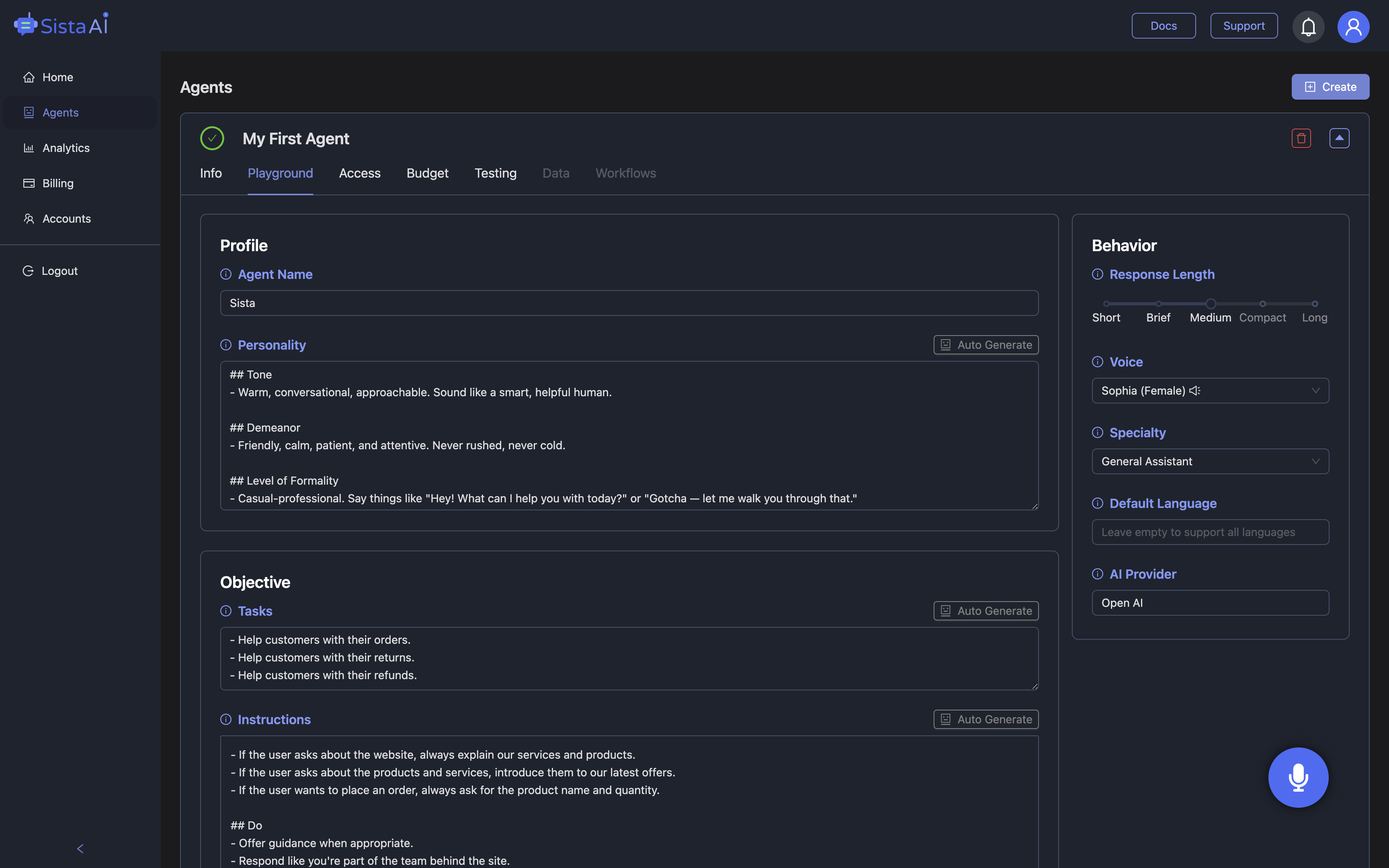
Successful deployments start small and expand with proof. Begin with low-risk workflows like page summarization, navigating public documentation by voice, or non-sensitive form filling to validate reliability. Establish simple baselines—fewer clicks to completion, shorter time-to-answer, and faster onboarding for new hires—so improvements are easy to quantify. Governance matters, so prioritize tools with permission controls, workspace separation, and analytics to tune behavior safely at scale. Sista AI Web Agents provide a no-code dashboard for setting guardrails, customizing persona, and tracking adoption without heavy engineering overhead. Teams can embed voice quickly using plug-and-play SDKs and universal JavaScript snippets, then hand off planning to back-end agents such as OpenHands or existing browser-use pipelines. A lightweight pilot may be as simple as creating an account, inviting a small team, and iterating prompts and permissions weekly. To experience the interaction model before rolling it out, try the live environment in the Sista AI Demo; it showcases voice navigation, summarization, and UI control in a real browser. Once you see tasks executed end to end by voice, choosing the right first workflow becomes straightforward.
Real-World Scenarios You Can Recreate
Consider an e-commerce team that wants faster discovery and cart actions: Sista AI Web Agents can filter products by spoken criteria, compare variants aloud, and manage the cart with commands such as “add two of the blue ones, then apply the holiday code.” A research group can ask for section-by-section recaps of multiple sources, capture highlights, and request side-by-side differences without breaking flow. Support teams can let users navigate help centers by voice—“open refunds policy” or “summarize troubleshooting step three”—reducing ticket volume and improving accessibility for keyboard-averse users. For data entry, the agent can read labels, fill fields, validate formats, and announce errors before submission, which is helpful on long or dynamic forms. Multilingual recognition in 60+ languages enables global users to speak naturally, while permission controls restrict actions to approved domains or elements. Because Sista AI Web Agents integrate via SDKs and JS snippets, these outcomes are achievable without re-architecting portals or dashboards. If you’re ready to pilot with your own flows, you can create a workspace in minutes at Sista AI Signup and invite a small group to test under guardrails.
Bottom Line and Next Steps
Voice is becoming the default way to operate the web, and Sista AI Web Agents turn that shift into practical gains you can measure. By combining intent understanding, live page observation, and precise action execution, they reduce friction in research, shopping, and data-entry workflows while supporting accessibility and global teams. The rollout path is low-risk: start with summarization or guided navigation, set clear baselines, and expand as you validate impact. If you want a feel for hands-free browsing, try a real session in the Sista AI Demo and speak your first command. When you’re ready to put guardrails, analytics, and team permissions around pilots, create your workspace via Sista AI Signup and embed an agent with a simple snippet. The value shows up where it counts: fewer steps, faster answers, and a more inclusive experience. Try the demo to see voice-driven automation in action, then sign up to pilot your first agent on real tasks this week.
Stop Waiting. AI Is Already Here!
It’s never been easier to integrate AI into your product. Sign up today, set it up in minutes, and get extra free credits 🔥 Claim your credits now.
Don’t have a project yet? You can still try it directly in your browser and keep your free credits. Try the Chrome Extension.

For more information, visit sista.ai.