AI Edge in 2025: Real-Time Intelligence Meets Everyday Devices
AI Edge—running AI models on local devices instead of relying solely on the cloud—has shifted from a niche trend to a mainstream strategy in 2025. Analysts project a 35% CAGR through 2027, with revenues near $13 billion this year, up from $8 billion in 2024. That momentum is fueled by over 30 billion connected devices gaining on-device intelligence, from wearables and cameras to vehicles and factory robots. The payoff is tangible: sub-10-millisecond inference brings decisions closer to real time, which is crucial for safety, continuity, and user experience. Privacy also improves because sensitive data can stay on-device, supporting compliance needs across regions. Advances in 5G and Wi‑Fi 6E reduce network dependence and smooth over connectivity gaps. In short, AI Edge gives businesses speed, resilience, and control—exactly what modern digital experiences demand.
Speed, Privacy, and Reliability: The Core Benefits of AI Edge
Moving computation onto devices slashes latency from hundreds of milliseconds to under 10 milliseconds, enabling immediate actions such as dynamic braking in autonomous systems or instant anomaly alerts on factory floors. It also trims bandwidth use by filtering and prioritizing data, which some deployments report reduces upstream traffic by up to 60%. In healthcare, continuous monitoring wearables using edge inference have been shown to cut emergency response times by 40%, protecting patients when seconds matter. For industrial teams, predictive maintenance computed locally can flag faults a day before failure, cutting downtime by roughly 30%. Privacy benefits are equally compelling: local processing keeps raw data from ever leaving the premises, lowering exposure and easing regulatory pressure. Even during network outages or cyber incidents, edge devices can continue operating, improving business continuity. These gains make AI Edge an operational cornerstone rather than a mere optimization.
Frameworks and Tooling That Make AI Edge Practical
Modern frameworks—TensorFlow Lite, PyTorch Mobile, and ONNX Runtime—have matured, making it feasible to run compact yet accurate models on constrained hardware. Techniques such as quantization-aware training and sparsity allow INT8 models to reduce compute needs by up to 75%, often delivering 3x faster inference and up to 5x energy savings compared to FP32 baselines. Hardware-focused SDKs like NVIDIA JetPack and Intel OpenVINO streamline acceleration, while device orchestration platforms like Azure IoT Edge and AWS IoT Greengrass standardize updates and monitoring at scale. Real-world cases show the impact: drone fleets performing on-device image triage for disaster relief, and retail kiosks doing sentiment analysis for instant, personalized recommendations. As consumers grow familiar with chatgpt voice experiences on their phones, they increasingly expect similar low-latency voice interactions in stores, vehicles, and apps. This convergence of tools and expectations gives AI Edge a robust path from prototype to production.
Business Outcomes: Costs Down, Revenue and Resilience Up
Enterprises are investing accordingly: a recent survey indicates 68% plan to expand AI Edge spending this year, with manufacturing (42%), automotive (35%), and healthcare (28%) leading adoption. The economics justify the push. Organizations report around 25% reductions in operational costs via lower data-transfer fees and faster, automated workflows. Meanwhile, firms pairing AI Edge with IoT often see 10–20% revenue uplift thanks to smarter products and better customer experiences; retailers using real-time inventory and dynamic pricing have noted nearly 15% sales gains. Edge autonomy also strengthens risk management by preserving core functions during outages or attacks. Sustainability benefits are emerging, too, with estimates of roughly 15% lower data center energy use when shifting suitable workloads to efficient edge devices. In factories, a typical scenario shows predictive maintenance catching anomalies a day early, curbing expensive unplanned downtime and stabilizing throughput.
Where Sista AI Fits: Voice-First Interfaces for an AI Edge World
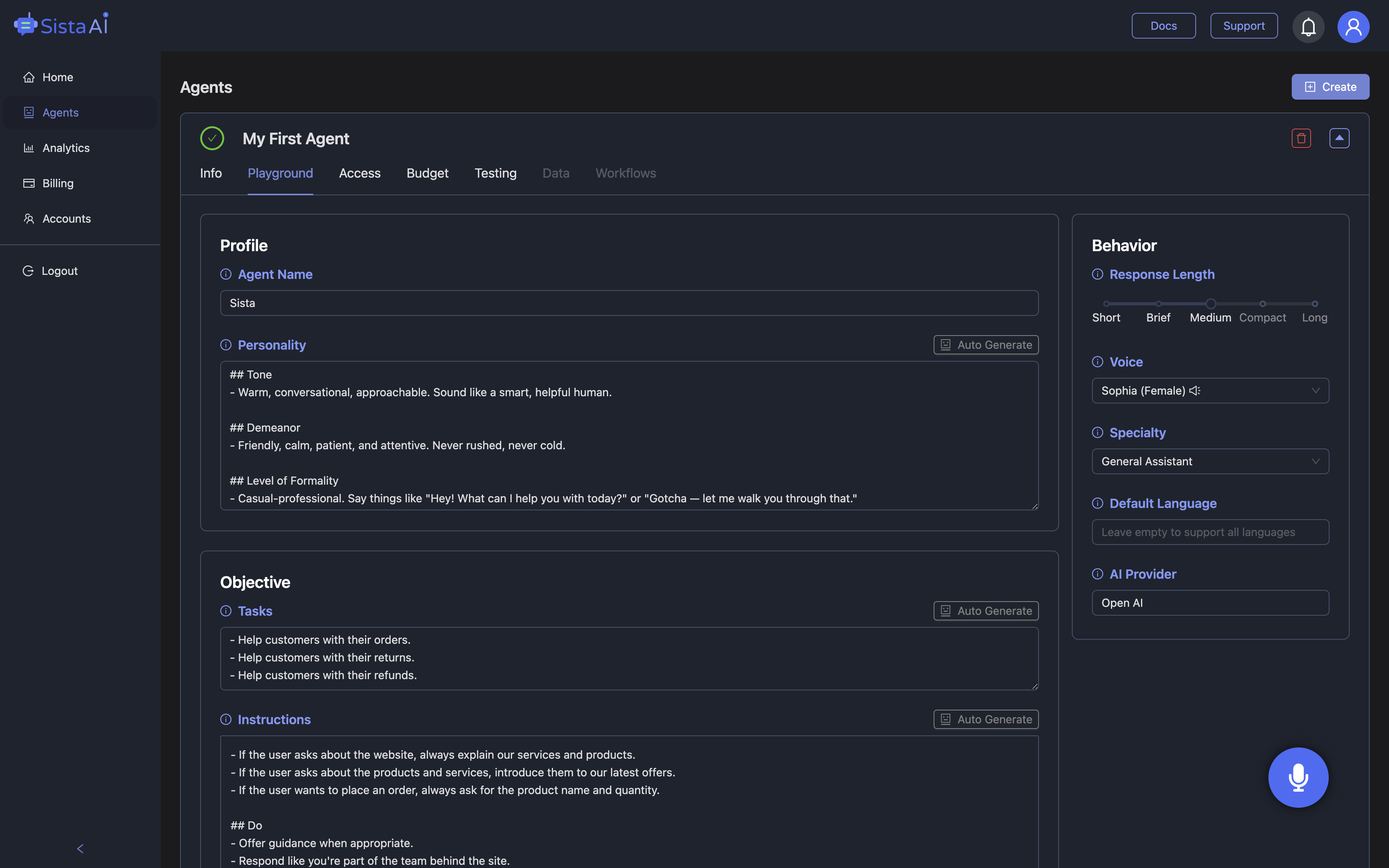
As AI Edge makes real-time decisions possible, the next question is how people interact with those decisions. Sista AI addresses this by bringing voice-first, human-like interaction to websites, apps, and digital interfaces—ideal companions to edge intelligence. Its embeddable agents handle natural language, control UI elements via voice, and automate multi-step workflows, helping teams capitalize on low-latency pipelines. Multilingual recognition across 60+ languages and built-in accessibility features broaden reach without heavy engineering lift. Consider a retailer: an in-store kiosk or web app can offer voice-based discovery and cart assistance, while back-end systems leverage local inference for instant product availability checks. Or imagine a patient portal where a voice agent triages common questions and reads on-screen instructions clearly, improving compliance and reducing support load. You can experience these capabilities in context through the Sista AI Demo, which showcases responsive, low-latency conversations aligned with AI Edge principles.
Getting Started Quickly—And Scaling with Confidence
Adopting AI Edge usually involves new models, devices, and data flows, but the interface layer doesn’t have to be complex. Sista AI ships with plug-and-play SDKs, universal JavaScript snippets, platform plugins, and a no-code dashboard for rapid customization. Teams can pair edge inference for time-critical analysis with Sista AI’s conversational layer to explain results, trigger actions, and capture feedback in real time. This approach aligns with the hybrid future many leaders expect, where edge and cloud share the workload for performance and scale. If you’re piloting AI Edge in manufacturing, healthcare, or retail, a voice agent can reveal usability gaps fast and turn silent data into interactive guidance for users. Ready to experiment? Spin up a proof of concept by trying the Sista AI Demo and see how a voice agent complements your edge pipeline. When you’re set to deploy more broadly, you can sign up to configure permissions, workflows, and analytics for production.
Stop Waiting. AI Is Already Here!
It’s never been easier to integrate AI into your product. Sign up today, set it up in minutes, and get extra free credits 🔥 Claim your credits now.
Don’t have a project yet? You can still try it directly in your browser and keep your free credits. Try the Chrome Extension.

For more information, visit sista.ai.