Designing Voice Experience Starts With Real User Context
Designing Voice Experience is no longer optional as voice assistants move from novelty to necessity. By 2026, nearly half of the U.S. population is expected to use voice assistants, which means your product will be judged against daily interactions with Siri, Google Assistant, Alexa, and even chatgpt voice. Users bring expectations of natural, human conversation, not rigid command trees. This shift extends beyond phones and smart speakers to cars, enterprise tools, and embedded devices, where hands-free operation is essential. With that expansion, privacy and data control move to the center of the design process, not the edges. Micro-interactions—like subtle tone changes, short auditory cues, and visual hints—also boost clarity and reduce anxiety when the system confirms, corrects, or asks for more input. The goal is a calm, confident flow that feels like talking to a capable guide. Sista AI supports this direction with real-time, low-latency voice agents that understand context, remember short-term session details, and can automate on-screen tasks without heavy engineering. The result is a practical path for teams to meet rising expectations while keeping complexity under control.
Seven Principles That De-Risk Voice: From Clarity to Care
The strongest foundation for Designing Voice Experience rests on seven principles: understand user needs, simplify interactions, provide clear feedback, ensure accessibility, handle errors gracefully, maintain privacy, and continuously improve. In practice, that looks like short turns of speech, confirmation for sensitive actions, and quick escalation to visual options when voice alone isn’t enough. Accessibility means designing for varied accents and ambient noise, as well as supporting users with visual or motor impairments. Error handling should feel like a polite human—acknowledge the miss, rephrase, and offer choices users can select by voice or tap. Privacy should be explainable: what’s recorded, why, where it’s stored, and how it’s deleted. Continuous improvement requires analytics on misrecognitions, drop-offs, and completion rates to refine prompts, intents, and guardrails. Sista AI helps teams operationalize these ideas with session memory, multilingual recognition across 60+ languages, and a no-code dashboard to iterate quickly. If you want to explore how these principles play out in a working flow, try a quick conversation in the Sista AI Demo and note how confirmations, barge-in, and recovery steps are handled in real time.
Design for Multimodal, Mobile, and Multilingual Reality
Designing Voice Experience increasingly means designing beyond voice alone. Smart displays and mobile devices blend talk, text, and touch, so voice responses should be concise while screens offer scannable options like bullet points, chips, or cards. Content needs to be structured into clear, short answers—especially for quick questions that assistants read aloud from featured summaries. Speed matters on mobile; long audio responses and slow-loading visuals break trust. Global usage demands multilingual support and localized phrasing, since direct translations can miss intent or cultural nuance. For example, a travel site might answer “What’s the best time to visit Lisbon?” in one sentence, then display a card with months, temperature ranges, and typical costs. Sista AI’s automatic screen summarization and voice UI controller make multimodal flows practical, letting the agent highlight, scroll, or fill forms while it talks. In one pilot, a university used a voice agent to guide scholarship searches: the agent read eligibility criteria, filtered programs on-screen, and saved results—reducing task time from minutes to seconds while keeping students in control.
From Prototype to Production: Guardrails, Automation, and Trust
Teams succeed when they treat Designing Voice Experience as a product lifecycle, not a one-off skill. Start by mapping tasks where voice is truly faster than clicks: search, filtering, status checks, and repetitive data entry are common wins. Define guardrails for sensitive actions—spoken confirmations for payments, privacy-first defaults, and clear opt-in for recording. Instrument the experience: track intent match rates, error loops, and time-to-completion so you can iterate prompts and flows. For complex journeys, automation is key; let the agent call backend actions, trigger workflows, or execute lightweight code to finish tasks end-to-end. Sista AI streamlines this step with plug-and-play SDKs, a universal JavaScript snippet, and platform plugins, so teams can add a voice layer without rewriting their stack. Its RAG knowledge base integrates product docs or support FAQs, while code execution handles real-world tasks like booking, ticket creation, or profile updates. E-commerce teams, for instance, have used a voice agent to compare products, add to cart, and initiate checkout in under a minute—measurably improving completion rates and reducing support load.
Where Voice Is Heading—and How to Take the First Step
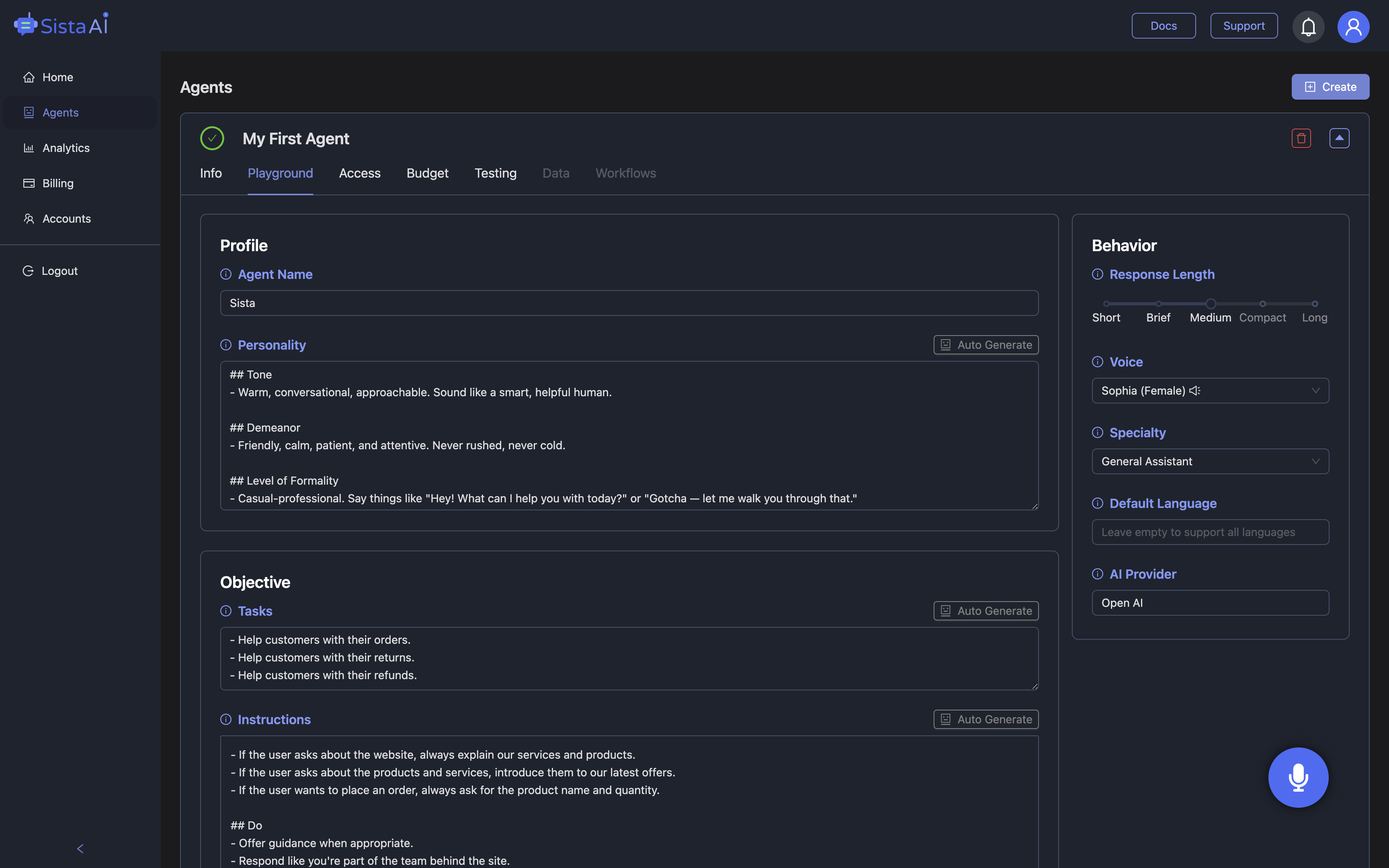
Voice is moving toward context-aware, multimodal assistants that feel like capable collaborators. The playbook is clear: prioritize user intent, keep turns short, show your work on privacy, design graceful recoveries, and iterate with data. As you plan your next sprint, pick one high-friction flow—such as onboarding, search, or support triage—and pilot a voice layer that helps users finish in fewer steps. Sista AI aligns with these trends through real-time voice automation, session memory, multilingual support, and simple deployment models that fit websites, apps, and CMS platforms. If you want a quick, low-risk way to test your assumptions, start a conversation in the Sista AI Demo and observe how users navigate tasks with their voice. Ready to ship a pilot in days, not months? You can sign up to configure your agent, connect knowledge sources, and measure outcomes from a single dashboard. Small experiments today set you up for a future where voice is the most natural interface your users touch.
Stop Waiting. AI Is Already Here!
It’s never been easier to integrate AI into your product. Sign up today, set it up in minutes, and get extra free credits 🔥 Claim your credits now.
Don’t have a project yet? You can still try it directly in your browser and keep your free credits. Try the Chrome Extension.

For more information, visit sista.ai.