The Real Question Behind “What Is the Best AI Voice Assistant?”
When people ask, “What is the best AI voice assistant?”, the most accurate answer is: it depends on what you want to achieve. Consumer needs like smart home control, privacy, and on-the-go queries differ from business goals such as call deflection, automated workflows, and analytics. The category is booming—industry estimates put the market near USD 33–34 billion in 2024 and on track to pass USD 100 billion by the early 2030s, propelled by better language models and multimodal interfaces. With 8.4 billion voice-enabled devices in use and the majority of interactions happening on smartphones, assistants are now a daily habit rather than a novelty. That’s why “best” must be defined by context: language coverage, ecosystem fit, latency, uptime needs, and integration depth. Even trends like chatgpt voice and Google’s multimodal updates reinforce a simple truth: capabilities matter, but alignment with your use case matters more. If you’re evaluating tools this year, start with a clear scope and measurable outcomes before you compare features.
Consumer vs. Business Landscape in 2025
Market data shows two big segments: entertainment-type assistants dominate with roughly 58% share, while business-focused tools hold about 42% but are growing slightly faster. Regionally, North America leads with around 36% share, followed by Asia-Pacific at roughly 28% and Europe near 22%, each expanding thanks to smartphone penetration and connected devices. Most voice interactions—about 91%—occur via phones, and home usage remains strong, underscoring how embedded assistants are in daily routines. On the consumer side, Alexa excels in smart home control and accessibility, Siri prioritizes privacy within Apple’s ecosystem, and Google Assistant shines in call assistance and Android integration. For professionals, transcription and meeting assistants such as Otter AI simplify note-taking and action items. Enterprises, meanwhile, look for 24/7 availability, multilingual coverage, and integrations with CRMs, help desks, and data sources. If you’re still wondering, “What is the best AI voice assistant?” the baseline split—consumer convenience versus business automation—helps narrow the field quickly.
Leaders by Strengths: Matching Assistant to Task
Independent reviews consistently rank solutions by what they do best. Alexa remains a top pick for smart home control and accessibility, with broad device support and skills. Siri is favored by Apple users who value privacy and seamless handoffs across iPhone, iPad, and Mac. Google Assistant, now evolving with Gemini for multimodal understanding, is strong for call assistance and productivity across Android and Workspace. In enterprise scenarios, PolyAI stands out for voice-first customer service, offering robust dialogue management, SLU/NLU, and multilingual support for contact centers. Otter AI focuses on business transcription and meeting intelligence—useful for teams that live in Zoom or Google Meet. Spitch targets omnichannel assistance, while VOCALLS leans into automation-heavy voice workflows. Open-source options like Mycroft appeal to technical users seeking customization and control. Even as chatgpt voice gains traction, selection still hinges on deployment complexity, analytics depth, security posture, and how quickly an assistant can plug into your stack.
Turning Voice Into Outcomes with Sista AI
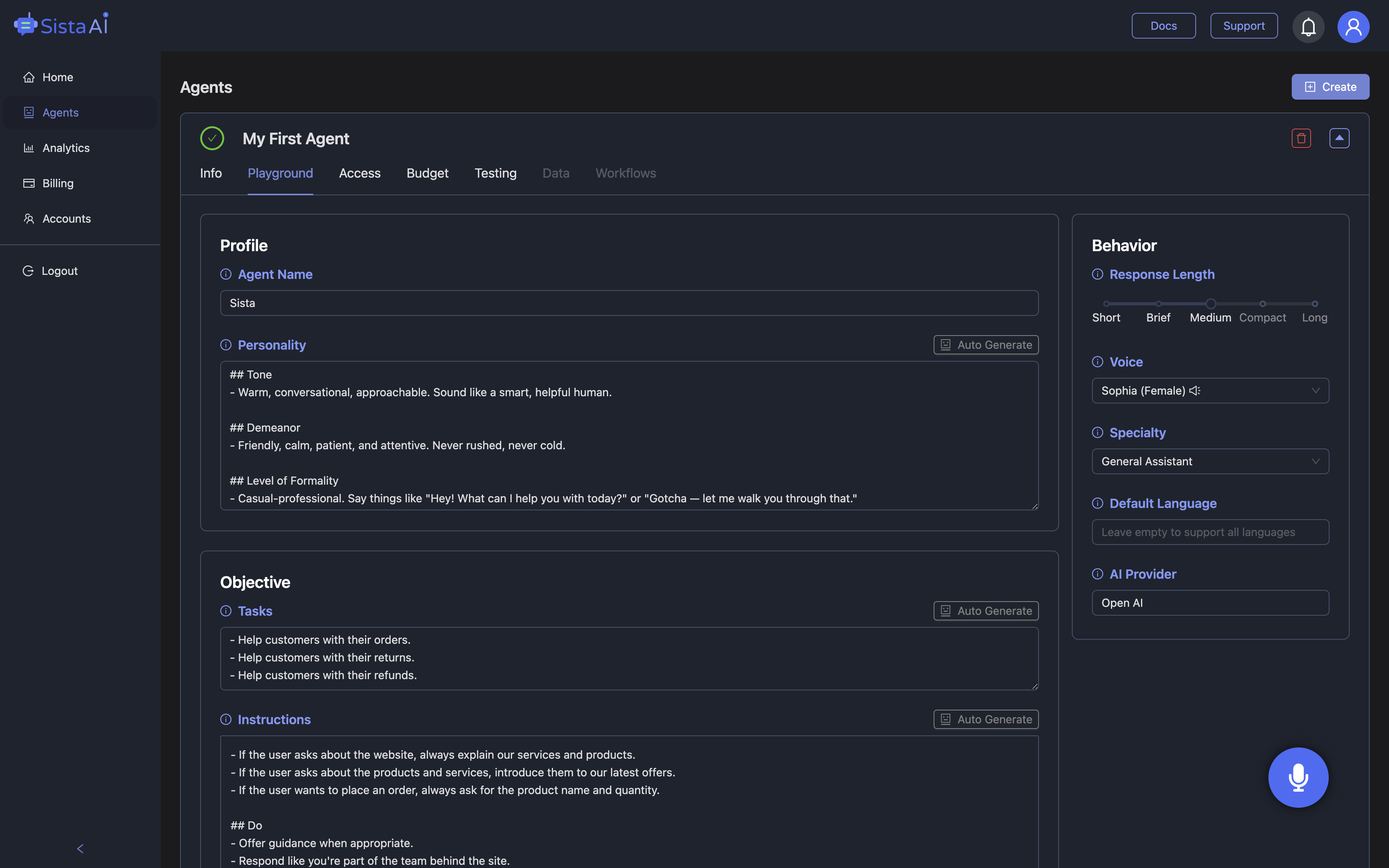
For teams that need to add voice and automation directly to websites or apps, Sista AI offers a practical bridge between consumer-style convenience and enterprise-grade outcomes. Its plug-and-play AI voice agents handle natural conversation, execute voice UI commands (scroll, click, type), and automate multi-step workflows. With support for 60+ languages, ultra-low latency, session memory, and integrated knowledge retrieval, the assistant can answer questions, guide users, and complete tasks without handoffs. Consider two quick scenarios: an e-commerce store that boosts conversion by offering a voice-driven product finder, cart updates, and checkout guidance; or a healthcare portal that reduces call volumes by handling appointment scheduling, form-filling, and eligibility checks on-page. Setup is lightweight—a universal JS snippet or platform plugins for WordPress, Shopify, and more—so teams can pilot fast and learn faster. If you want to hear it in action and explore configuration options, try the Sista AI Demo to test real-time voice interactions on a live interface.
Bottom Line: Choose by Goal, Pilot, and Measure
Instead of asking broadly, “What is the best AI voice assistant?”, pin down the job to be done: home control, privacy-first personal use, call assistance, contact center automation, or on-page task completion. Then run a small pilot with clear KPIs—time to resolution, first-contact containment, conversion rate, CSAT, and accessibility impact. Many teams find that adding voice directly inside their product, rather than pushing users to a separate channel, produces faster wins. That’s where Sista AI fits: voice-led guidance, on-screen automation, and instant integration across your existing stack. Whether you’re enhancing onboarding in a SaaS app or reducing support tickets on an e-commerce site, the path is the same—define a narrow flow, test, and expand. Ready to operationalize voice where your users already are? You can sign up to configure your first agent in minutes, then iterate with real usage data. It’s a pragmatic way to stay aligned with market trends and deliver tangible results fast.
Stop Waiting. AI Is Already Here!
It’s never been easier to integrate AI into your product. Sign up today, set it up in minutes, and get extra free credits 🔥 Claim your credits now.
Don’t have a project yet? You can still try it directly in your browser and keep your free credits. Try the Chrome Extension.

For more information, visit sista.ai.